

Finding Solace in Simple Stitches

I think a constant hum of low-level anxiety is an entirely reasonable reaction to the state of the world. Especially for those of us who live in a country run by a cruel, vulgar man driven by short-term thinking, self-interest, and unrestrained ego, each new day brings a fresh dose of dread.
As a society, I believe we Americans have a responsibility to bear witness to the atrocities being committed under our flag. Turning a blind eye is not an option. But as an individual, I know living in a state of outrage is not healthy. We each need to find a way to stay anchored in calm.
One of my main strategies for staying anchored is what I’ve jokingly called emotional support knitting. This is a knitting project that lives in a basket next to my desk. I reach for it in the early morning as I read the news on my computer.
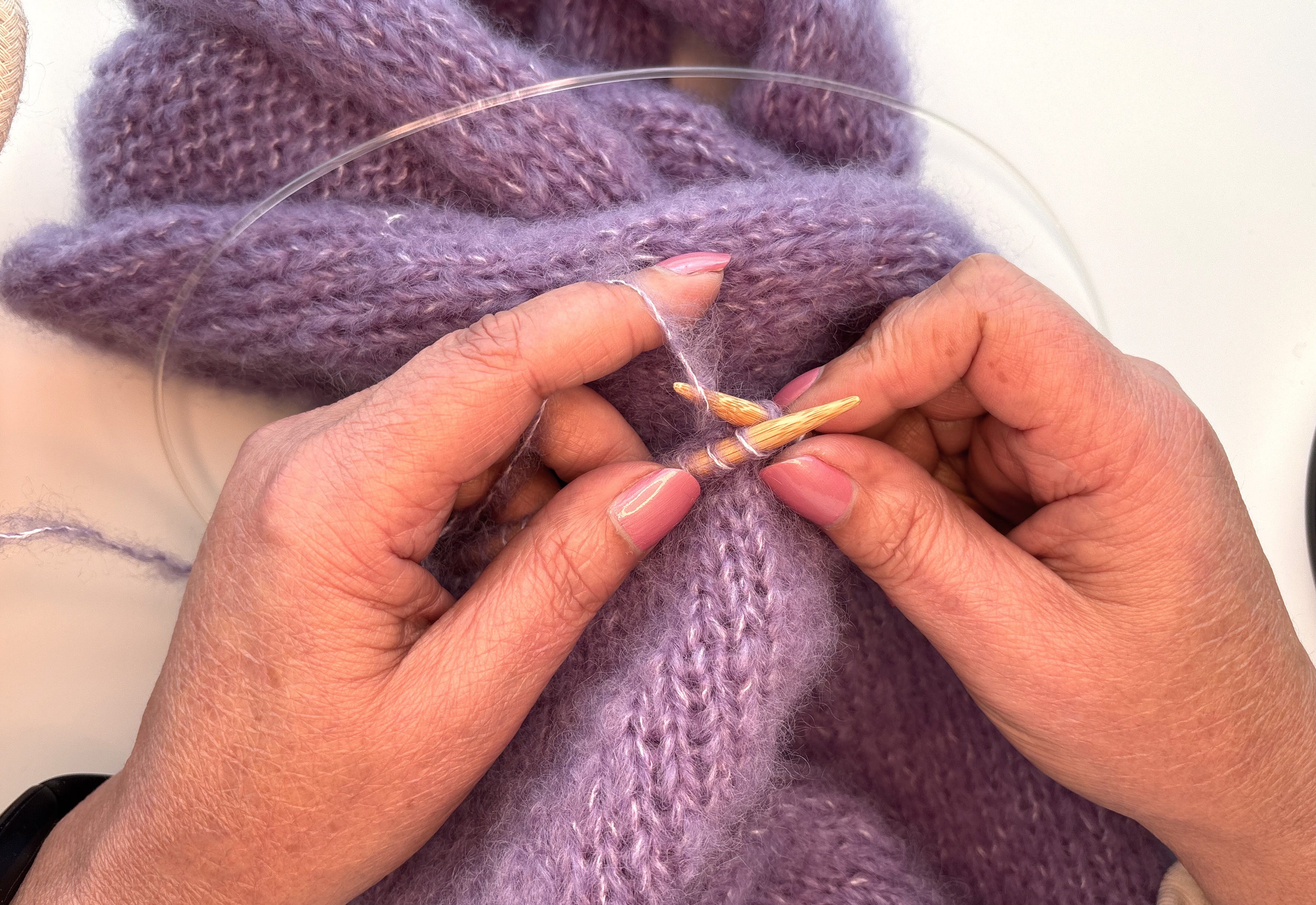
My current emotional support project is this stockinette stitch scarf made with Purl Soho’s Paintbrush Mohair. This role has also been filled by the bodies of top-down pullovers, basic ribbed hats, and the legs and feet of simple socks.
Emotional support knitting often ventures beyond the walls of my home office. It’s with me when I travel, at the doctor’s office, at the hospital while a friend is in surgery, at the Department of Motor Vehicles. Any activity that might involve indeterminate waiting is an occasion for emotional support knitting.
What Qualifies as Emotional Support Knitting?
An emotional support project is knitting I can do while reading. My hands do the knitting without requiring much thought or attention. This means basic textures like stockinette stitch, garter stitch, ribbing, or seed stitch. No lace, no cables, no colorwork, no charts. Little, if any, shaping.
The yarn must feel good in my hands. It must be soft and elastic. It must flow easily through my fingers and have enough structure that my stitches don’t split. It must be a calming, happy color. Poopy browns and neon brights need not apply.
Studies have shown that the repetitive action of needlework can reduce the physical impact of stress, lowering your blood pressure and heart rate. I think it also provides a small sense of control in a world where we often have so little. I may not be able to avoid airport delays or stop the falling bombs, but I can make this simple, beautiful, useful thing.
Do you engage in emotional support knitting? What are your criteria for an emotional support project? What other strategies to you find helpful for maintaining your equilibrium in this world gone mad? I’d love to hear about it in the comments.
Thanks to my beloved friend Ladianne for suggesting emotional support knitting as a topic worthy of a post.
I’m grateful to subscriber Logan for recommending this week’s book: The Woman They Could Not Silence by Kate Moore.
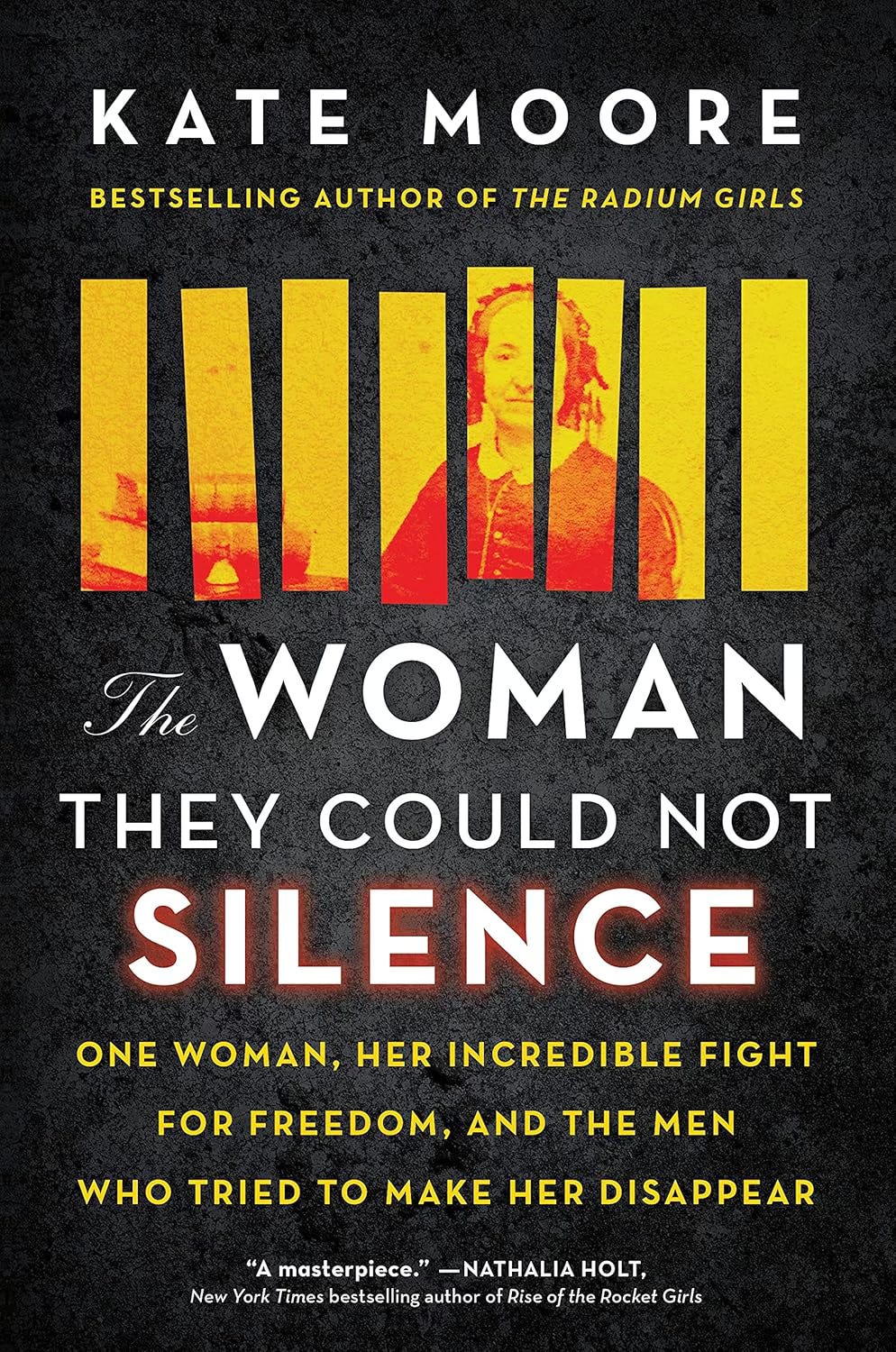
This work of narrative non-fiction tells the story of Elizabeth Packard, a married mother of six who, in 1860, was committed to an insane asylum by her husband of more than 20 years, Theophilus Packard.
At the time, the State of Illinois, where the Packards lived, required a public hearing before a person could be committed against their will. The exception was married women, who could be committed by their husbands without either a public hearing or her consent. Married women had no independent legal identity and no legal rights.
The story of Elizabeth’s three years in the Jacksonville Insane Asylum is horrifying. Her insistence on her sanity and her fight for release on her own terms displayed an inspiring level of courage.
When she was finally released, Elizabeth became an advocate for the equal rights of married women to property and custody of their children. She was instrumental in the introduction and 1869 passage of legislation in Illinois and Massachusetts granting married women these rights. Until her death in 1897, she traveled the country lobbying for reform of both insane asylums and the status of married women.
The author crafts Elizabeth’s story into a powerful and propulsive narrative, with ample quotations from Packard’s own journals and published writing. The audiobook is skillfully read by the author. Her voice is pleasant and well-paced. She avoids the temptation to convey too much personal outrage in the reading.
The Woman They Could Not Silence is one of those stories I can’t believe I didn’t know before now. It’s a compelling reminder of just how ingrained patriarchy is in our culture, and of the impact one woman can have when she insists on being heard.
Things that caught my eye…
Here’s a look at the exhibition of the work of Thomas Gainsborough at The Frick Collection in New York through the end of May.
Enjoy this look at what it takes to feed a film crew at work.
Do you have what it took to earn membership in a Medieval Knitting Guild?
In the past week, I’ve watched all 24 episodes of RFDS: Royal Flying Doctor Service on PBS Passport. I’d happily watch another 24 episodes. This is a terrific show, a medical drama along the lines of early E.R., but in small airplanes in the Australian outback.
As always, thank you for spending your time with me this week. I’m grateful for your company and support. Remember to stay strong and take care of yourself, but don’t close your eyes. Speak up for what you believe and spread kindness where you can.
“When you put love out in the world it travels, and it can touch people and reach people in ways that we never even expected.” — Laverne Cox
I was just thinking this morning as I walked my dogs that walking them and knitting are 2 things that keep me sane and help keep anxiety under control. Something so calming about knitting, the slow formation of fabric from 2 pointy things, neat and gentle repetition. The world may be going crazy but the reality of holding needles and making something beautiful reminds me of the small joys that make it all worthwhile
I love the idea of of emotional support knitting! How did I not think of this?! Thanks too for the book recommendation. I’m going to read it